For companies
A team challenge where
everyone builds a drone.
Crews of five, a box of parts each, and one afternoon to get everything flying. It runs as a game rather than a class, and somewhere in the second hour the org chart stops mattering.
We are a community of makers across Pune, Bengaluru, Mumbai and Hyderabad, 2,000 members strong. This is the same format we run at our own build days, sized for a company.
The short version
Your team splits into crews of five. Each crew gets a box of drone parts and a laptop. Over the session they put the drone together, get it working, and fly it through a short course while everyone watches. Fastest crew wins.
Hands on the whole way through, nothing to prepare beforehand, and it does not matter at all whether someone is technical. We bring everything, run the day, and clear up after.
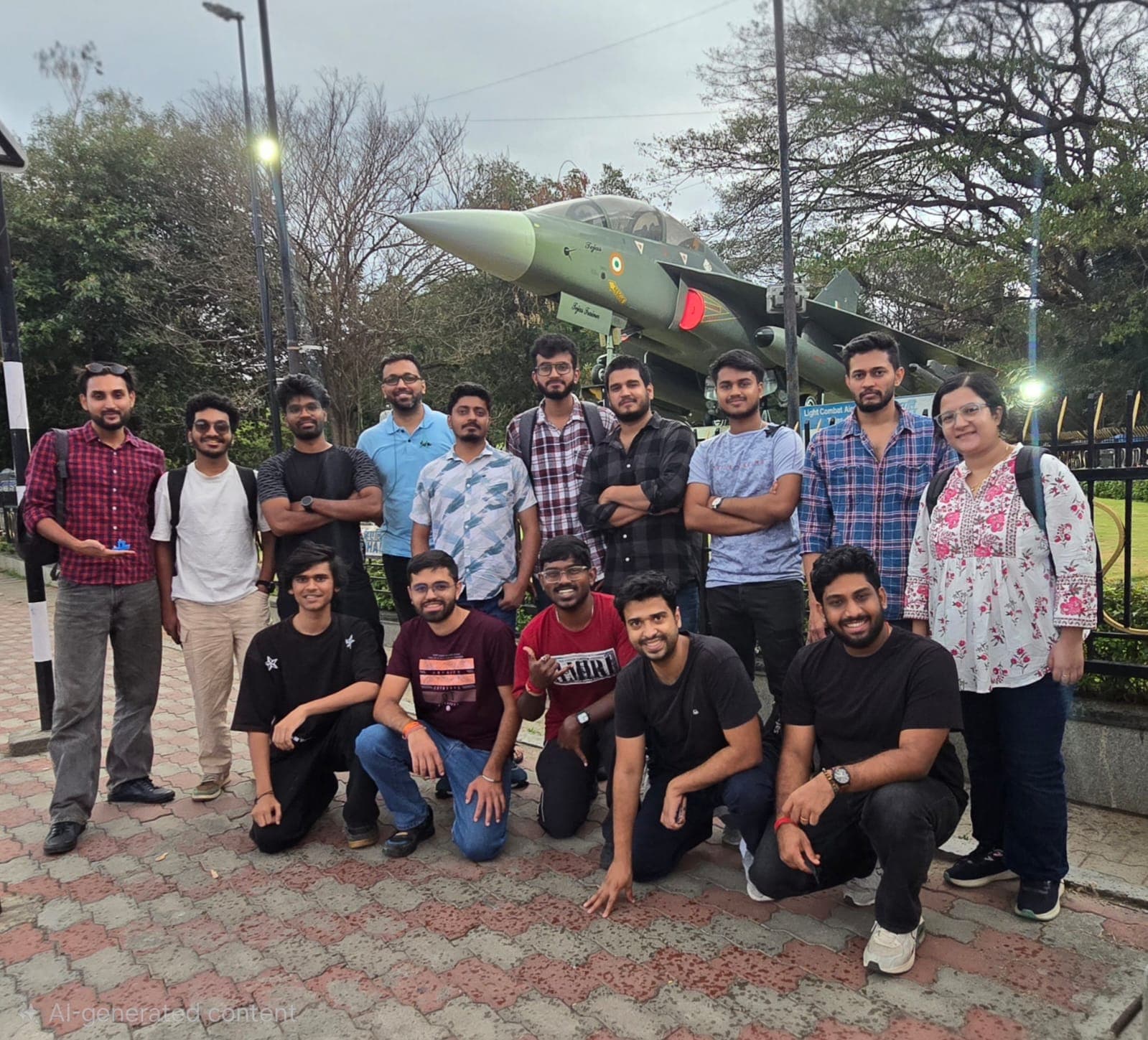
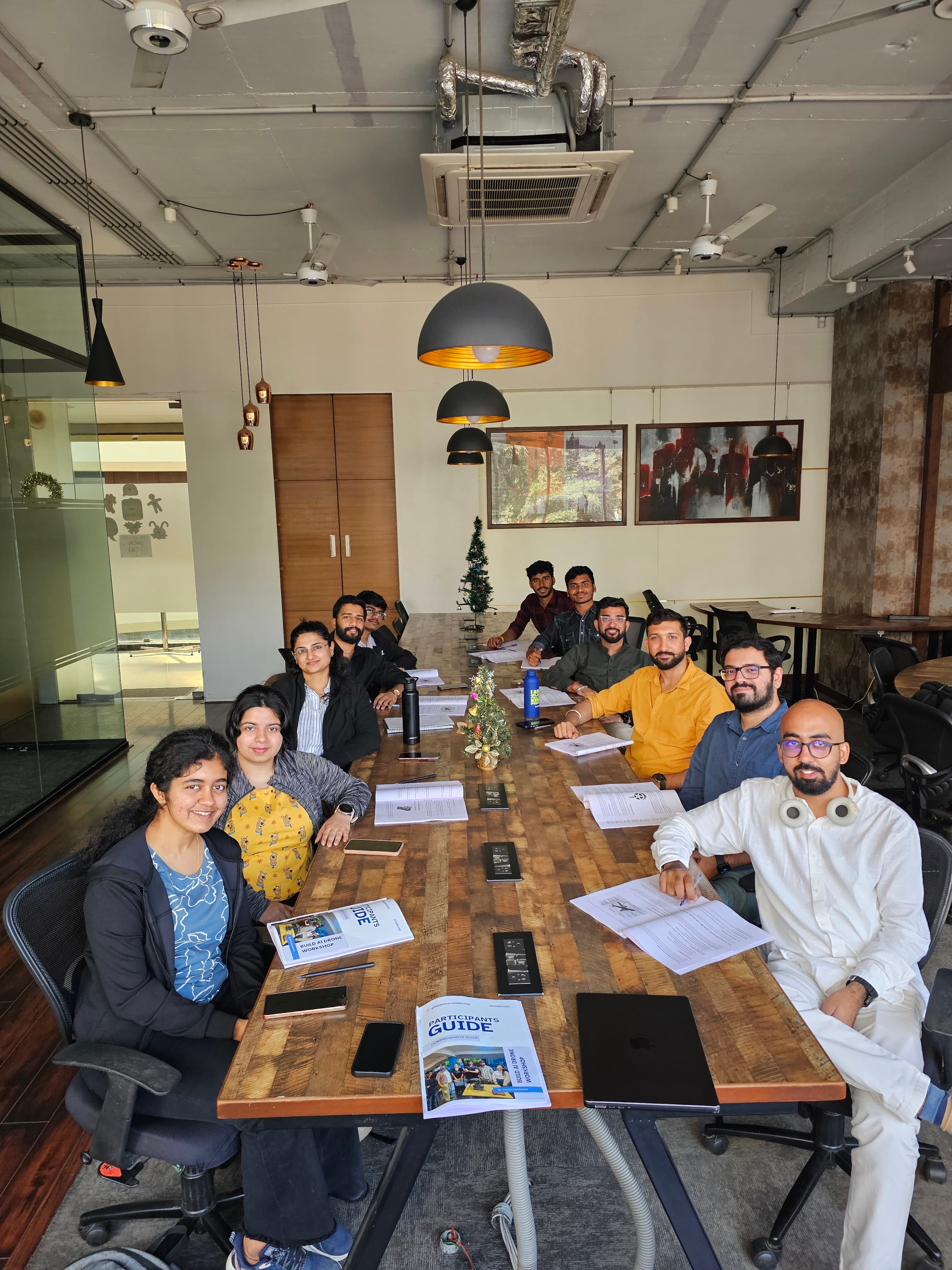
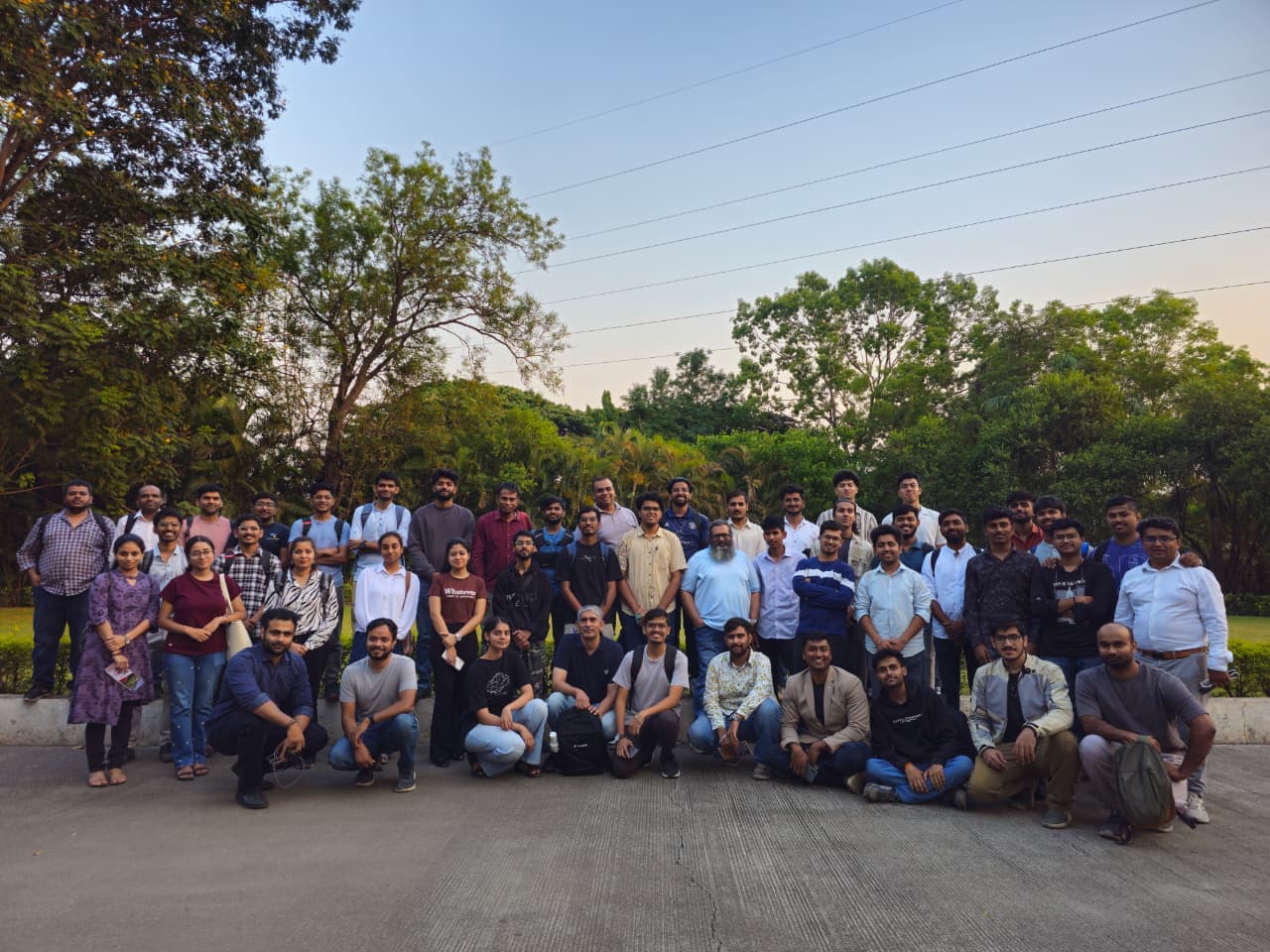
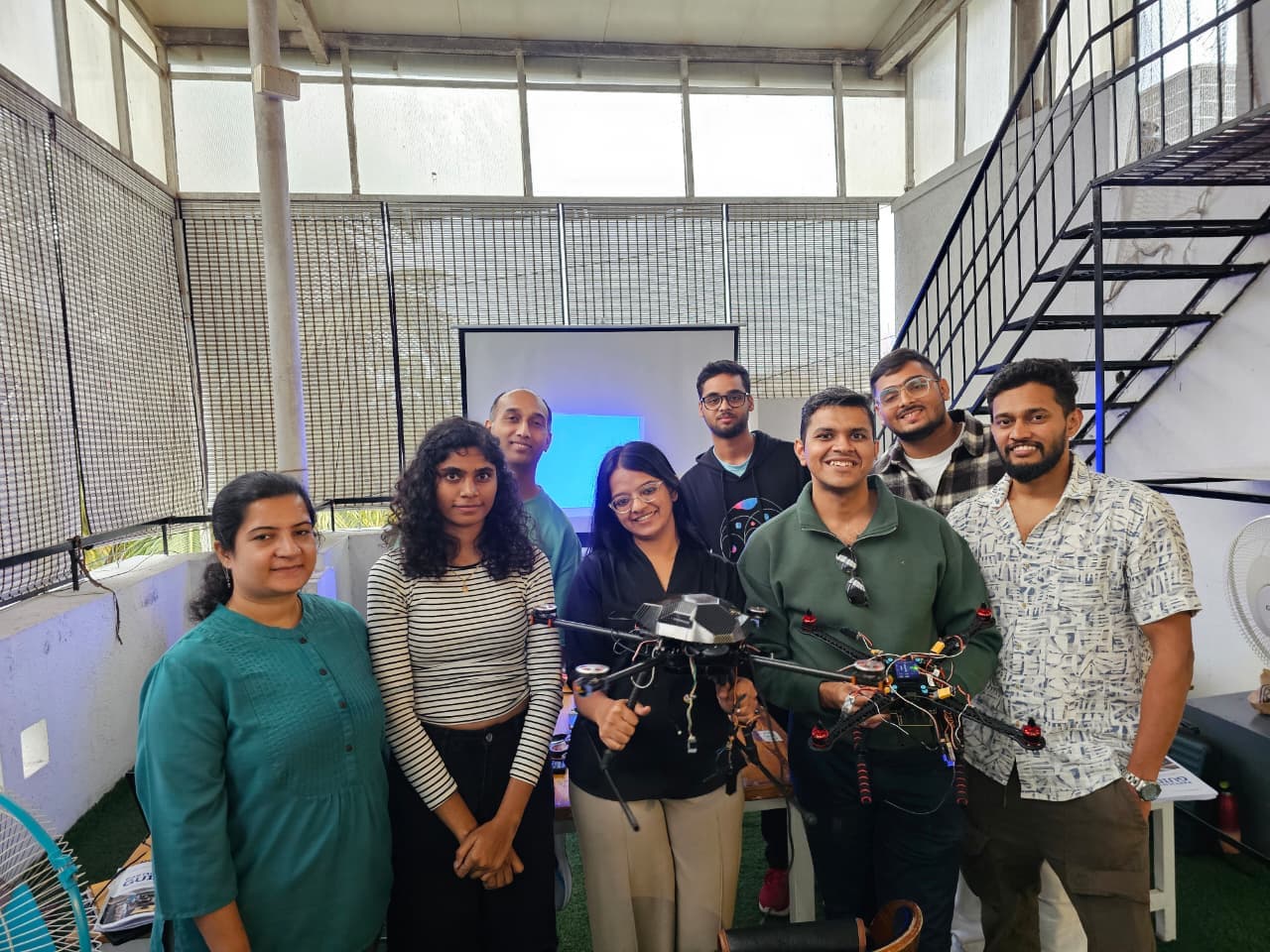
How the session runs
Five phases, in order. Exact timings are set once we know your schedule and the space, and the whole thing fits inside four hours including a break.
Crews are drawn, call signs picked, rules and scoreboard go up. No icebreakers.
Frame, motors, propeller guards, fitting the control board, connecting the power. Scored as crews go.
Software loaded from a laptop, remote paired, sensors calibrated, first test hops. Points for every crew that gets airborne.
Timed indoor course, crew by crew, everyone watching.
Results, prizes, group photo.
No soldering and no hot tools anywhere in the session. Everything is screw together, plug in and load, which keeps a large group moving at the same pace.
What it develops
This is not technical training. Nobody leaves as an engineer, and that is not what you are buying. What happens is that five people with a deadline and an unfamiliar problem have to organise themselves.
- Dividing work fast, with no assigned leader and no brief
- Communicating under time pressure, with a scoreboard everyone can see
- Debugging together when something does not work and nobody knows why
- Deciding on incomplete information, then living with the decision
- Working across technical and non-technical backgrounds, which the format rewards
The format is built so technical knowledge helps but does not decide who wins. Crews that organise themselves well beat crews that know more, reliably enough that we can predict it.
The hardware is ours
Every drone needs a small circuit board that acts as its brain, reading the sensors and deciding how fast each motor should spin. That board is called a flight controller, and most people buy one. We designed and built ours.
Ours is built around the ESP32-S3, a widely used microcontroller chip, the same class of part found in smart home devices. We wrote the software that runs on it and had the boards manufactured to our design. Your crews can read the pinout and ask why something was done a particular way, and the person who designed it is in the room.
Two ways to run it
Same activity in both. The difference is what people leave with and how much sits around it. Tell us your headcount and city and we will send a proposal with the numbers.
Crew Challenge
The session complete. Crews, kits, facilitators, scoreboard, timed fly-off and prizes for the winning crew. Kits stay with us and are reused.
- One drone kit per crew of five
- Facilitators, roughly one per three crews
- Scoreboard, course setup, prizes and printed crew material
- Photos and video from the day, shared afterwards
Full Experience
Everything above, and everyone leaves with their own drone, boxed. Around it we bring the rest of what we do.
- Everything in the Crew Challenge
- A drone each, boxed, to take home
- Live demonstration of our full size logistics drone
- Onboard AI and computer vision demo, object detection running live
- Supervised flight zone where your team flies a professional aircraft
What we need from you
- A hall or open area with tables and power for each crew
- Standard office ceiling height is fine, the aircraft are under 100 grams with propeller guards
- Access from two hours before the session for setup
- A projector or screen for the scoreboard
- One laptop per crew with a USB port, used to load the software. Tell us if that is awkward and we bring our own
- Confirmed headcount two weeks ahead, since components are procured to that number
Safety
The first thing a facilities team asks, so stated plainly enough to forward internally.
- Under 100 grams, purpose built for supervised indoor flight
- Ducted propeller guards on all four motors, so nothing exposed is spinning
- No soldering, no heat, no sharp tooling at any point
- Flight only in a marked, supervised zone, with facilitators controlling when crews fly
- Batteries charged and handled by our team, never by attendees
Who runs it
Questions companies ask
Tell us the headcount and the city
We will come back with a proposal, usually within a day. If you are still scoping and just want to know roughly what this costs, ask and we will tell you.
Sessions are run by Quantessa Robotics LLP, Bengaluru. GST invoice provided.
Looking for our public workshops instead? They are on the workshops page.